
WTF America: An Outsider’s Perspective (Chapter 32)
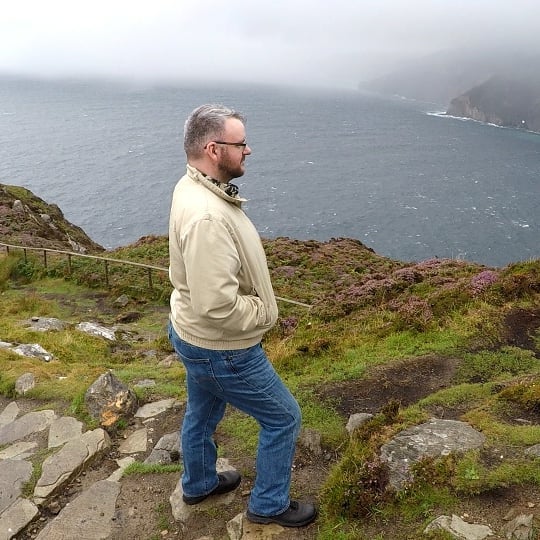
Perspective, outside.
I believe it was Mark Twain that was probably misattributed with a trite quote on someone’s Instagram, about the nature of travel making you intolerant of intolerance. About moving yourself to another part of the world will make you see things from other perspectives, and you’ll heal the world by getting on a plane. That misattribution probably isn’t wrong, but what changes isn’t the world, it’s you.
I’m just back from spending the first two weeks in Ireland I’ve seen since moving to America. I’ve been in the desert, with just occasional trips to California to stand in the pacific to reconnect myself to the earth, to that great vast expanse that is forever. Your world gets very small when you don’t spend 30 hours getting to another part of it. There’s a great deal of comfort in the familiar and I was struck by how much of a home Tempe, and the United States, had become. Get yourself a job, find a local liquor store, get you a routine. Live in it, savor it. Decorate the rut, you’ll find it lovely there.
The bigger thing that creeps in is accepting the things that are different from the place you’re from, and making them part of your normal. Twinned with the jet lag and travel disorientation, I was getting the spins from the level of caffeine in Irish Tea. Sweet Jesus, the fine tea. You begin to accept the things that are around you, with the little stuff coming first. Religious breakfast cereal, cream gravy for breakfast, the broad concepts of capitalism. Then comes the bigger stuff; the personal ownership and carrying of firearms, the disavowal of the clearly evident class system, the ice cream oreo flavoured ice cream.
The accepting isn’t necessarily bad, it’s just that a place is just stuff with people in it, and it’s the people that make it somewhere. Arizona is largely a bunch of transplants bitching about the heat. California is shiny happy people about 45 seconds from the brink of disaster, Ireland is a rocky outcrop on the west of Europe full of revolutionaries and some racists. Kimberlee and I toured Dublin, we visited museums, saw evidence of revolution everywhere, the history of the city painted broadly on park benches and busts in common green areas. And then a guy called an attendant in Busaras (The largest bus station in Ireland) a Paki because he wouldn’t let him use the bathroom without presenting a valid bus ticket. It’s the little things.
Travel does gain you a lot of perspective. First off – planet’s round, let’s put that one to bed. Years ago I told Americans that moving here was a lot like moving to a different planet. Flying for that fast, and that high, and that long, it certainly feels like you’re on an off-world colony. And those people you meet there aren’t like those back on Terra. They have weird customs, like tipping, and a million other things that make you feel like an alien. I’m not unlike an alien to them either, when I ask questions about shit they take for granted, like the propaganda.
One of the things that stuck me the most upon being outside the country, is how insane the American attitude is to what seem to other people to be reasonable issues. A recent plea from naturalist and documentarian David Attenborough was taken up with gusto as best I can tell by Irish people – let’s cut out single use plastics. So drinking straws, plastic coffee lids, coffee stirrers, that sort of thing. You could easily replace these things with paper, wood, and other sustainable materials, and our quality of life wouldn’t be impacted at all.
Irish people already did well with this by charging a fee of 22 cents per shitty grocery bag. It’s easy to do this, Irish people are on board with it, and it’s an all round good idea. This debate is happening globally so I was not surprised to see memes about it on Reddit from the American perspective while on holiday. I was surprised when I saw that people were declaring that you have their straws when you were prepared to take them from their frigid, lifeless mitts. This is the hill you’re prepared to die on. This is the cause that rallied you. This is where you drew the line.
Now given the baffling, yet entirely predictable rise of casual propaganda (your so titled “Fake news”) machine that comes from the sprawling behemoth that is the meme stock market, I’m more than prepared to accept that this stock image with text is not representative of public opinion. I’m prepared to accept that what I saw was in fact an attempt to make people look stupid, so people could have a baseless sense of smug satisfaction. Or people really do see plastic straws as the Thermopylae of Thermoplastics – this is where we Spartans shall hold back the tide that is the Persians. In this case, the Persians being people that don’t like litter.
One thing that occurred in Ireland was the sense of disorientation I mentioned above. It was very disorienting to come back to a place that I had called home for so long, as a visitor. I was not a stranger – people recognized me all over town, I saw acquaintances and friends alike light up when they saw me wander back into town, bleary and stricken with vertigo and sleeplessness. It took several days for it to feel like home, not least because my mother had moved house in the intervening five years.
Businesses had closed, new ones had opened, the previous order of things was different, but it was all relatively marginal compared to the switch from the US to Ireland. Yeah the tea’s better, and all the milk and butter comes from grass fed cows, and it’s all cheap, because it’s all Irish. A gallon of gas is not Irish, and thus costs $6.15. Pints of beer have a marker that certifies that by law the glass has been filled to exactly a pint, and that pint has its strength posted on the menu or on the can. Pints costed from €4.25 to €6.50. All the menus list all common allergens and their presence is foods. The oysters for example, contained shellfish. Who knew.
The little things that Ireland does, and the Irish people do are what made Ireland home, as they make any place home. Nobody will make a trip to make tea without offering you a cup of tea. Likewise, if you get up to make tea, expect that you will be asked to make tea for others. Irish people are happy to have frank conversations about politics, race, war, political race wars, and any number of other subjects that seem to be absolutely taboo for Americans.
I called Ireland a place of revolution, because it kind of is; the current Republic of Ireland as it stands has been in existence for less than 100 years. I’m sure there’s someone who remembers the stories told by a parent about their participation in the rising, or the subsequent civil war, or everything else that happened shortly thereafter. The revolution is not only televised, it is discussed, debated, and further revolutions are weighed and considered. While in Ireland, I read a newspaper wherein there was reporting on a strike by Irish airline pilots, and reporting on a recent court case where a woman sued an employer for forcing her to work unpaid outside of regular office hours. These stories were on the front page. So was a visit from the pope, but the crime section was buried in the middle of the paper. Revolution was more important. As was Mass, but there was also reports about papal abuses and the role they would play in the upcoming pope visit, so we’re still on the thread about revolution.
History is alive in Ireland, because we’re surrounded by so much of it. There hasn’t been time for it to develop a real patina, because we keep maintaining it. You can walk past the post office that was seized during the revolution, and see bullet holes in the pillars (Though possible casual propaganda warning). Irish history hasn’t been shellacked, and put in a case. No wall has been erected around history, and we’re not told that it is immutable and unchanging. History is there to interpret and criticize, and there’s nothing Irish people love more than criticizing something. Practically a national sport, right up there with hating the English, ripping the piss (Roasting your friends, constantly) and acrobatic swearing. “Fuck-handler” is always a crowd pleaser.
Irish people are very much in favor of progress, but they’re not always so fond of making it. The world must be a better place, but surely there’s someone working on that at the moment. A few factoids – we used to have a committee of evil literature devoted to the banning of books, we currently have a national ban on blasphemy in print which came into being in 2009 (Incidentally, fuck the church; just saying) and divorce was illegal per the constitution until 1996. That ban was struck down by 9114 votes by the way. Go register.
The recent referendum on the repeal of the eighth amendment caused a lot of furor, and was a topic of discussion. The nuts and bolts of it was there was a constitutional amendment that stated that life began at conception, and thus abortion was banned. Irish people were subjected to a brutal political campaign where there was a lot of hate thrown around, entirely from the kind of people that would scream “Babykiller” at someone that was walking to a doctor’s appointment. But Irish people have a really solid bullshit detector. I saw hundreds of women bravely telling their story about having to fly to another country to receive medical care, including cancer treatments because there was a whiff of pregnancy on them. This was about safe and effective medical care, and it passed, fucking resoundingly.
Note the phrasing – repealing a constitutional amendment. This is blanket anathema in America. The constitution is not nearly considered so living a document in the US. It’s shellacked. It’s under glass. There’s a guy with a gun a few feet away I’ll bet you. You can’t escape the cultural language of a place you live in, and when people are willing to go to “cold dead hands” for semi-autos or fucking drinking straws, it’s hard to have a debate. When you live in a place where you are currently voting on what the fucking constitution will say, you’re engaged in a way that America won’t let you be. When you can’t even have a civil discussion about a non-political issue, because of your political affiliation, you’re not allowed to think certain things. In Ireland you can think whatever the fuck you want. Just be careful about saying it, because it might get back to the neighbours.
I felt no disconnection with the people of Ireland. They are my people, my tribe, and it only took me three or four days to begin incorporating the idioms and grammar patterns again. Kimberlee was terribly confused. We walked the soil, drank in the history, stood in the ocean, reconnected to the world. A world that wasn’t so alien, so strange, that didn’t immediately start shitting in its hands and throwing it around when someone mentioned the word “Healthcare” or “Socialism.” Ireland is small, but it is agile when it wants to be. When it comes to deciphering its history, when it comes to trying to protect its people, when it comes to something as simple as maybe not littering so much.
So believe in those trite Instagram quotes, post that same selfie everyone takes on the beach, visit the tourist spots, be tricked into the myth of the bullet holes, or buy something with the Guinness logo on it. But try to remember that where you live can change you forever. It might not make you a stranger, but it might make you a visitor and a tourist. Or it might make you the best person you’ve ever been. Or maybe you’re just an asshole with a fridge magnet.
How We Survived – End Of The World (Nano2016, chapter 13)
One. Two. Three. Four. They sang their cadence as they marched. The snow remained deep, but the air was warmer in the days now. Or at least it chilled the bones less. They had been outside the city for three days now, marching to some towns that were supposed to lead them to the source of the bandits. When they were in the city, they had heard many stories about the growth of lawlessness around the city in the summer time. Most of the residents had abandoned the wider outskirts of the city and they had left it to the police, army, and bandits to fight over it. With the freeze of winter, the bandits had fled, hidden among the people of the city, or frozen to death in unheated buildings. Everyone talked about the problem solving itself, and the problem just going away as the snow blanketed the world and enforced a ceasefire. Frozen hands couldn’t pull triggers, and solid powder didn’t fire. Frostbitten fingers couldn’t grip knives, or throw stones. Kristina knew better.
How We Survived – Guardians of light (Nano2016, chapter 12)
It was a strange kind of science and magic that held a dome together. From the bunkers and hydro farms underneath, to the electric trams above, to the towering housing blocks, to the glittering brass plated steel and glass that bubbled them all in, each had its part to play. All was dictated by the genius of Buckminster Fuller. His ideas became the math behind survival, the design behind the domes, the beating heart of dome ecosystems. Nothing could exist as a closed system – there needed to be input from somewhere. So there was light. There were influxes of people, and grain, and water. Where there was still water, and people, anything could be created.
If you were to build a dome city from scratch, it would be significantly easier than retrofitting cities that already stood. Blasting could achieve the underground clearance needed in a new city. But if the city was already there, you had to work around its people. First was the core, the stomach of the city, deep below the other functions – the farms and water. By boring into the ground, cities could access groundwater. Some cities dropped a shaft, more than a mile deep into the earth, as simply a first step to ensuring survival. Without water, there was no future for the people. All water that came from the ground was circulated upwards, first to the farms and people, and then everywhere else. On cold days the breath of hundreds of thousands would condense on the glass of the dome, building a mist around the people, and trickling its way down. It didn’t meet soil – it met drains, that brought it through reclamation plants, distillers, and other treatment centers. If the water wasn’t kept clean, it would doom a city.
How We Survived – Defenders of the Fatherland (Nano2016, chapter 11)
A colossal crack deafened several men, and outright killed two others. Grenades were flying and bullets zipped past ears close enough to sound like lead wasps. There was an immense firefight, as bodies charged hard held lines, and fell flat on their faces. Taking any kind of fortification was practically pointless, but generals gave orders, and those orders made it to the ground, and boys and men were pushed to try and follow them. An order never looked the same on the ground as it did on the small white table covered in miniature representations of war. The commanders loved playing with their toy soldiers. And then men marched to their death.
The battle and siege had already been going on for months. Yet all the while, the hammers kept falling, and the guns kept being produced. Sometimes they were made from scrap metal, panels from old cars, even cut up broken guns. Anything to keep sending bullets forwards to keep the city theirs. Karas worked in secret all those months, to produce a very special commission. The order had come in under an anonymous name just days before the armies arrived beyond the outskirts of town. The artillery shells had already started falling by the time he had started machining.
How We Survived – The Pack (Nano2016, chapter 10)
What was there but your pack? A city was a pack, but it was more like ants. Some mass of creatures scuttling, seemingly uninvolved with each other, but all working together in some small way. They made the place run just by being there, and doing what they were going to do anyway. A town was a pack – the people knew each other better, and it was the first point where you’d start to see people banding together properly. A town moved like a colony, a group of great apes. There were leaders, and followers, the females, and the children. Big structure, but it was all just a pack. The villages were the last stop before the wilderness. Villages were more like symbiotic animals. The birds picked the ticks, and the cop moved the drunks along. The mothers brought food to the young, and the bakers made the bread. But they didn’t move like ants, and there wasn’t a strict hierarchy. But under it all, from a country to a friendship, it was all a pack.
Dylan slid down against his perch, and stretched his leg to the fire, pushing small lumps of dry wood back before they could escape. Every fire seemed to burn brighter, and throw more sparks into the air. Carlos and Frank lay across the other side of the circle, Carlos asleep with his hat over his face, and his bag under his head. Frank whittled. They listened for the faint sounds of insects drawn by the fire, the dull beats of moth wings, the sharp puff when one of them strayed too close.
How We Survived – Centralia (Nano 2016, chapter 9)
It was a half moon that began its slow climb into the sky that night. It rose from the east, first peering through the long dead trunks before hitting clear sky. The stars seemed to part to make space for their majestic king. The light in the darkness spread across the ground, illuminating the sparse vegetation that struggled against its ultimate fate. Nothing that couldn’t move lived on this patch of earth for very long. The bracken and lichen began in wisps and it strived so hard to reach into the light, to overtake this place. It drank weakly of the water, and tasted all it could of the air. But this was all for nothing. Soon it would grey and feel its roots contract, shrivel, and crawl out of an earth that seemed to reject its presence.
The moon climbed on, bringing more dim illumination into the shadowy places. The eternal stone showed its cracks to the world, wearing its battle scars proudly. It had survived ice ages, and the boots of soldiers, and every end of the world so far. Madmen raved, carpetbaggers wheeled and dealed, saints whispers, tyrants screamed, and the everyday people talked of things deep, or idle. There was no more of that here. There was only one woman there to witness it.
Celia had grown up here. She barely knew of a world before the choke. Her father had told her stories, he had shown her the places where the plants were thick and lustrous. He told her about the arm thick vines that dipped their roots into the bottoms of streams and provided homes for tiny river fish that darted through the water like shooting stars. Providing brilliance in each moment. The moon crept on.
How We Survived – The Grey (Nano2016, Chapter 8)
Chester sat waiting for the morning meeting with Linus in the usual spot. He tried to stay alert but he kept drifting off to sleep only to have the bobbing of his head wake him up again. Chester didn’t do well in the mornings even with coffee that was full of aspartame and chocolate pastries filled with HFCS. The mornings under the Omaha dome were always cold so Chester had spent years sleeping later and later into the day until the dome had heated up to a tolerable level. It was hard for him to break that habit, even if he had been in New Philadelphia for a few years. The patchy sleep schedule of a detective didn’t help. At least Danny had been getting up in the morning and going to bed at night. Danny seemed very motivated these days so Chester had to get by on five hours of sleep so that he could get up before him. Danny would be going to the west side today and Chester was doing his best to be alert.
Linus dragged his feet while walking and flopped down beside Chester. He slapped Chester on the shoulder to stir him out of his bobbing head doze.
“I’m awake, I’m good, I am ready to go” yawned Chester.
How We Survived – Water (Nano 2016, Chapter 7)
A low wind blew the loose sand around the camp, sweeping it across the corrugated iron walls of Abel’s shack. His cough rattled loosely as he sat bolt upright, attempting to recall the last time he’d had a drink of clear water.
“Tank”, he rasped at the other side of the room, “Tank, get up.”
Something massive stirred in its cot, but didn’t rise. Abel threw a dented hubcap at the cot, but ended up just knocking over a can of rusty nails. He gave up on rousting Tank, wrapped himself in something that approximated clothes and stepped outside into the breeze. He stared out at what he figured would soon be the rising sun and walked away from the beaten camp to find a latrine. He snatched a small folding shovel from his bike in case he didn’t find one. You always had to bury it; you didn’t want to alert the flying insects to your presence for any reason. He pondered as he squatted that even though there wasn’t a lot of eating on them, if you got enough insects together you could get a decent handful of protein. He buried it anyway; there would be better ways to eat today.
How We Survived – Lord Willing (Nano 2016, chapter 6)
Early in the choke, we didn’t understand what was going on. Many of us were children then, catching snippets of a changing world from our parents. We would fear each coming day. Not just being afraid, as children are, but we were filled with a dread of a monster that we couldn’t even see. No one would tell us what was happening, so the spaces in our mind became filled with darkness, and twisting terror. Some of us came from Louisiana, and some of us had been there as the hurricanes raged, and filled our homes with water, each year worse than the last. Others, they lived in Kansas and saw the homes of their neighbours ripped to matchwood, each year worse than the last. The children of Los Angeles saw earthquakes, the children of Montana were buried in what seemed like a mile of snow. The Texan droughts, the crippling smog in the cities that would not abate. It’s a miracle of God that we survived to make it here at all.
Chester leaned back in his rocking chair, as the young children looked at him afraid, and the teenagers sat clasping their hands waiting for the world of the story to get better. He was never sure just how each new group would react, but he knew that history had to be preserved in more than just books. These children had never known the world outside this safe place, so they needed to know how it once was up there on the surface.
How We Survived – Your Place (Nano 2016, chapter 5)
Such beauty was rarely beheld by human eyes. Great swathes of vegetables growing bright and vibrant. Waves of grain stretched as far as the eye could see. He turned his palms downwards while walking forwards letting the husks brush against his palms. Their hard exterior gave way to the soft nutrition inside. He walked among the food that would feed the people of the world. His fruits, his vegetables, his grains… this was the food which the world marched upon. Children born would be nourished by this, children would be raised on this, pregnant mothers would anxiously wait for this food. Hungry men, swept in the sweat of work would sit down with families and pray. They would link hands, and break the bread grown from his ground would adorn the table. All we ready to feast, but moments would be taken. Either the brief breaks before a sandwich at work, or the careful time taken by a housewife to knead, proof, and bake a loaf.
The bright and vivid hues of the peaches in summertime, or the deep browns of pecans and walnuts in the autumn. He tilled soil, he pruned trees, he planted each seed with care. No day began without a breakfast made possible by his work. The nights spent caring for plants, walking between the furrows spraying deftly at the leaves, clipping leaves, straightening petals. The world began and ended with food. And he was the world’s farmer.